Articles – Miscellany
Miscellaneous articles that provide context for the lives of the Farnhill WW1 Volunteers.
Miscellaneous articles that provide context for the lives of the Farnhill WW1 Volunteers.
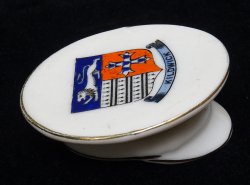
The image shows a piece of WW1 “crested china”, and if it wasn’t for the fact that it’s obviously meant to represent a WW1 soldier’s cap, you’d think it was something that you might find in a maiden aunt’s china cabinet – but in fact that’s exactly what it is !
xxx
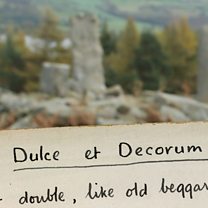
One of the displays in our end-of-project exhibition, “From Farnhill to the Front”, showed how the experiences of the Farnhill WW1 Volunteers were reflected in the iconic poetry of the war period, the work of the so-called War Poets.
This material is presented here as a series of short pieces, to be published individually, the combined effort of two members of the project, Isobel Stirk and Graham Taylor.
xxx
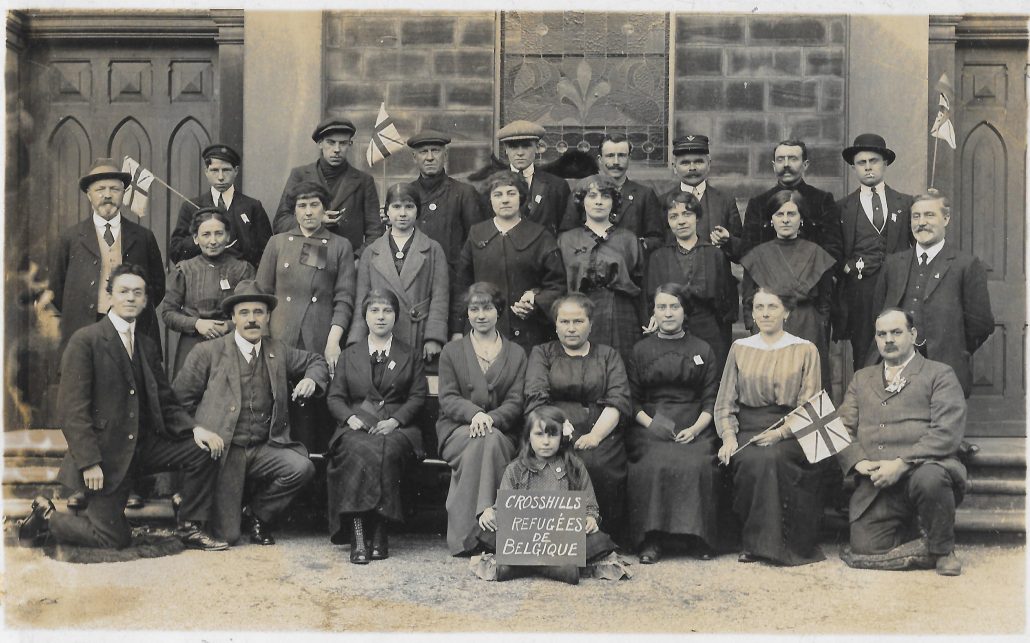
In the early months of the war, before a large number of men were serving in France, the major impact of WW1 locally was the arrival of refugees from Belgium.
Local townships provided homes and jobs for the refugees and contributed substantial funds to refugee charities.
xxx
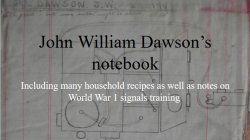
Farnhill WW1 Volunteer John William Dawson served in the Royal Field Artillery during the war and kept a signals training notebook. After the war his wife Annie put the book to a different use, using the blank pages to record recipes and household hints, starting at the back with the pages turned upside down.
A slideshow has been created showing both uses of the notebook.
xxx